Egyptian Arabic vs Levantine Arabic: Key Differences Explained
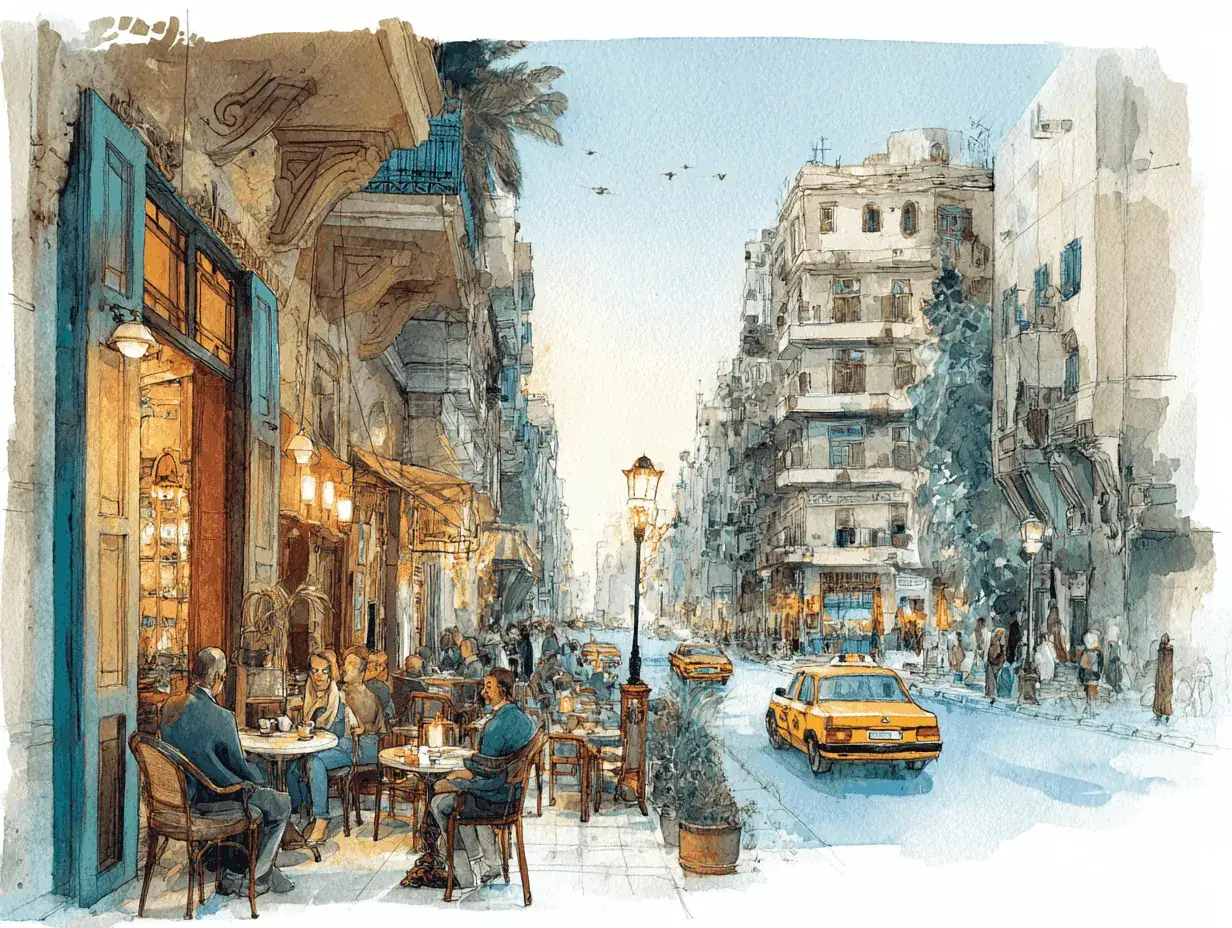
The Two Dialects Every Arabic Learner Eventually Has to Choose Between
If you are learning Arabic as a foreigner, chances are you have been told to pick between two dialects: Egyptian or Levantine. These are the two most popular choices among non native learners, and for good reason. Together they dominate Arabic language media. They have the most learning resources. They are the most widely understood. And they are the two varieties you are most likely to encounter whether you are traveling, working, or building relationships in the Arab world.
But how do you actually decide between them? What is the real difference? Is one easier than the other? Will people judge you for your choice? This guide is going to walk through everything that matters, from pronunciation and vocabulary to grammar and cultural context, so you can make an informed decision and commit with confidence.
Spoiler: there is no wrong answer. But there is a right answer for you specifically.
A Quick Overview
Egyptian Arabic is spoken by over 100 million people across Egypt, and it is the most widely understood Arabic dialect in the entire Arab world. Thanks to decades of Egyptian dominance in film, music, and television, Arabs from Morocco to Saudi Arabia have grown up watching Egyptian movies and listening to Egyptian music. This gives Egyptian a universal understanding that no other dialect has.
Levantine Arabic is spoken across Palestine, Syria, Lebanon, and Jordan by roughly 35 to 40 million people. The four countries have their own small regional variations, but they share enough vocabulary, grammar, and pronunciation that learning “Levantine” generally means you can communicate across all four. Levantine is beloved for its soft, melodic sound and has a deep cultural reach through music, cuisine, literature, and global diaspora communities.
Both dialects descend from the same Arabic root language. Both use the same alphabet. Both share an enormous amount of vocabulary. But in daily use, they feel genuinely different in ways that matter to learners.
How They Sound (The First Thing You Will Notice)
Close your eyes and listen to an Egyptian speaker for thirty seconds. Then listen to a Palestinian speaker for thirty seconds. You will hear the difference immediately, even if you do not speak a word of Arabic.
Egyptian Arabic sounds punchy, snappy, and expressive. The rhythm is quick. Words are compressed, syllables dropped, and sentences delivered with a certain theatrical quality. Egyptians tend to be loud, animated, and emotionally vivid speakers. The sound of Egyptian Arabic feels confident and direct.
Levantine Arabic sounds melodic, smoother, and gentler. The rhythm flows rather than punches. Vowels are rounded, consonants softened, and sentences delivered with more musicality. Levantine speakers often sound like they are almost singing their words. The overall feel is warm and welcoming.
Here are the specific pronunciation differences that create these distinct sounds:
The Letter ج (jeem)
In Egyptian, this letter is pronounced as a hard “g” like in “go.” So the word for beautiful, جميل, is said “gameel” in Egyptian.
In Levantine, it is a soft “j” like in “jump.” The same word becomes “jameel” in Levantine.
This one letter is the fastest way to identify whether someone is speaking Egyptian or Levantine. If you hear a hard “g” sound in words that should start with “j,” you are almost certainly listening to Egyptian.
The Letter ق (qaf)
In Egyptian and most urban Levantine varieties, the ق is often replaced with a glottal stop (imagine the sound in the middle of “uh oh”). So the word for heart, قلب, sounds like “alb” rather than “qalb.”
This letter behaves similarly in both dialects, which makes the difference less dramatic than with ج. But in formal speech or older forms, Levantine might preserve the ق more often than Egyptian.
Overall Rhythm
Egyptian compresses vowels and drops syllables. A word might lose an entire letter in rapid speech. Levantine holds onto vowels longer and preserves syllable structure more carefully. Listen to an Egyptian movie and compare it to a Lebanese song, and the difference in rhythm becomes obvious.
The Vocabulary That Changes Everything
This is where Egyptian and Levantine diverge the most, and where the dialect you picked stops being an abstract decision and starts affecting your daily conversations. Some of the most common words in Arabic are completely different between the two dialects. Not slightly different. Completely different.
“Now”
Egyptian says دلوقتي (dilwa’ti). Levantine says هلأ (halla’). These look and sound nothing alike.
“What”
Egyptian says إيه (eih). Levantine says شو (shu). Again, zero overlap.
“How”
Egyptian says إزاي (izzay). Levantine says كيف (kif). Different words entirely.
“I want”
Egyptian says عايز (aayez) for men and عايزة (aayza) for women. Levantine says بدي (beddi) for everyone. The grammar structure is also totally different.
“Here”
Egyptian says هنا (hena). Levantine says هون (hon).
“Where”
Egyptian says فين (fein). Levantine says وين (wein).
You get the idea. These are words you will use dozens of times every single day. Learning the wrong dialect version means that when you open your mouth, the word you reach for will not be the word the person in front of you expects to hear. They will still probably understand you (Egyptian has enough cultural dominance that everyone in the Arab world gets it), but you will feel a small mismatch in every interaction.
Grammar Differences That Actually Matter
The grammar structures of Egyptian and Levantine are mostly similar, but a few differences will shape how you build sentences from the very first lesson.
Negation
Egyptian uses مش (mish) before verbs, or a frame construction using ما before and ش after the verb. So “I am not going” becomes مش رايح or ماروحش.
Levantine primarily uses ما (ma) before the verb, without the ش ending in most cases. “I am not going” becomes ما بروح.
Present Tense Prefix
Both dialects use ب (b) as a prefix for present tense verbs, but Levantine sometimes uses عم (am) to indicate ongoing actions, similar to how English uses “am doing” versus “do.” So “I am eating (right now)” in Levantine is عم آكل, while “I eat (generally)” is بآكل.
Egyptian does not really have this distinction. You use ب for both.
Future Tense
Egyptian uses ه (ha) as a prefix for future tense. “I will go” is هروح.
Levantine uses راح (rah) or sometimes the verb بدي (beddi) to express future intent. “I will go” is راح أروح or بدي أروح.
These are not massive structural differences, but they mean that sentences you build in Egyptian will feel slightly off if you try to use them in Levantine, and vice versa.
Cultural Context and Cultural Reach
Beyond the linguistics, there is the question of where each dialect lives culturally and what doors it opens.
Egyptian Culture
Egypt has been the Hollywood of the Arab world for nearly a century. The Egyptian film industry has exported movies, comedies, dramas, and blockbuster stars to every Arabic speaking country. Egyptian music, from Umm Kulthum to modern pop, is the soundtrack of the Arab world. Egyptian comedians, influencers, and YouTubers shape Arabic internet culture in ways nobody else matches.
This gives Egyptian Arabic a reach that no other dialect can claim. Even Arabs who do not speak Egyptian can generally understand it because they have been consuming Egyptian media their entire lives. If your goal is to be understood by as many Arabs as possible with a single dialect, Egyptian is the obvious choice.
Egypt itself is also a massive country with rich history, ancient landmarks, bustling cities, and a culture that has shaped the region for thousands of years. If you plan to travel to or live in Egypt, you will hear the dialect constantly and need it for everything from hailing a taxi to ordering food to negotiating in a market.
Levantine Culture
Levantine culture is extraordinarily rich, but distributed across multiple countries with distinct histories. Palestinian hospitality. Syrian poetry and literature. Lebanese music, cuisine, and intellectual tradition. Jordanian Bedouin heritage. These cultures are interconnected but each has its own weight.
Levantine has a strong cultural pull for learners with personal or political ties to the region. Many people learn Levantine to connect with family, to express solidarity, to engage with the humanitarian and journalistic work happening in the Levant, or simply because they fell in love with the region’s music or food.
If you plan to visit Palestine, Syria, Lebanon, or Jordan, or if you work with the massive global Levantine diaspora, Levantine Arabic is the clearly better choice. Speaking a bit of someone’s home dialect when they have been displaced from their homeland is a gesture that carries real emotional weight.
Which One Is Harder?
Honestly, neither one is objectively harder than the other. They are roughly equivalent in difficulty for English speakers. Some learners find Egyptian easier because there are more learning resources, more native speaker content, and a clearer “canonical” form. Others find Levantine easier because the pronunciation feels more intuitive and the rhythms are gentler.
What actually affects difficulty is not the dialect itself but your personal motivation and connection to it. The dialect you care about is the dialect you will stick with. The dialect you stick with is the one you will actually learn.
How to Decide
Here is the short framework:
- Choose Egyptian if: You want to be understood across the Arab world. You love Egyptian movies, music, or comedy. You plan to travel widely across multiple Arabic speaking countries. You are drawn to the punchy, expressive feel of the dialect.
- Choose Levantine if: You have personal connections to Palestine, Syria, Lebanon, or Jordan. You work or want to work in the Levant or with the Levantine diaspora. You prefer the soft, melodic sound. You fell in love with Levantine food, music, or culture first.
The most important thing, no matter which you pick, is to commit to one dialect and practice it consistently through real conversations. Switching between dialects as a beginner is one of the fastest ways to make no progress in either. Pick one, stick with it for at least 6 months, and then consider branching out.
One Last Thing
Whatever dialect you choose, the tool you use to learn it matters just as much as the dialect itself. If you commit to Egyptian but your app keeps sneaking in Modern Standard Arabic phrases, you will end up with a confusing mix that nobody actually speaks. If you commit to Levantine but your app only has basic vocabulary drills, you will never develop real conversational skills.
Look for tools that teach your specific dialect cleanly and consistently, give you pronunciation feedback on the sounds unique to that dialect, let you practice real conversations in real scenarios, and do it daily. That is the combination that turns a dialect choice into actual fluency.
Stop studying Arabic. Start speaking it.
AI conversations in 10 real dialects, honest pronunciation feedback and a course from A1.
Get Yallah Speak — free