Arabic for Muslims: Learning the Language of the Quran in 2026
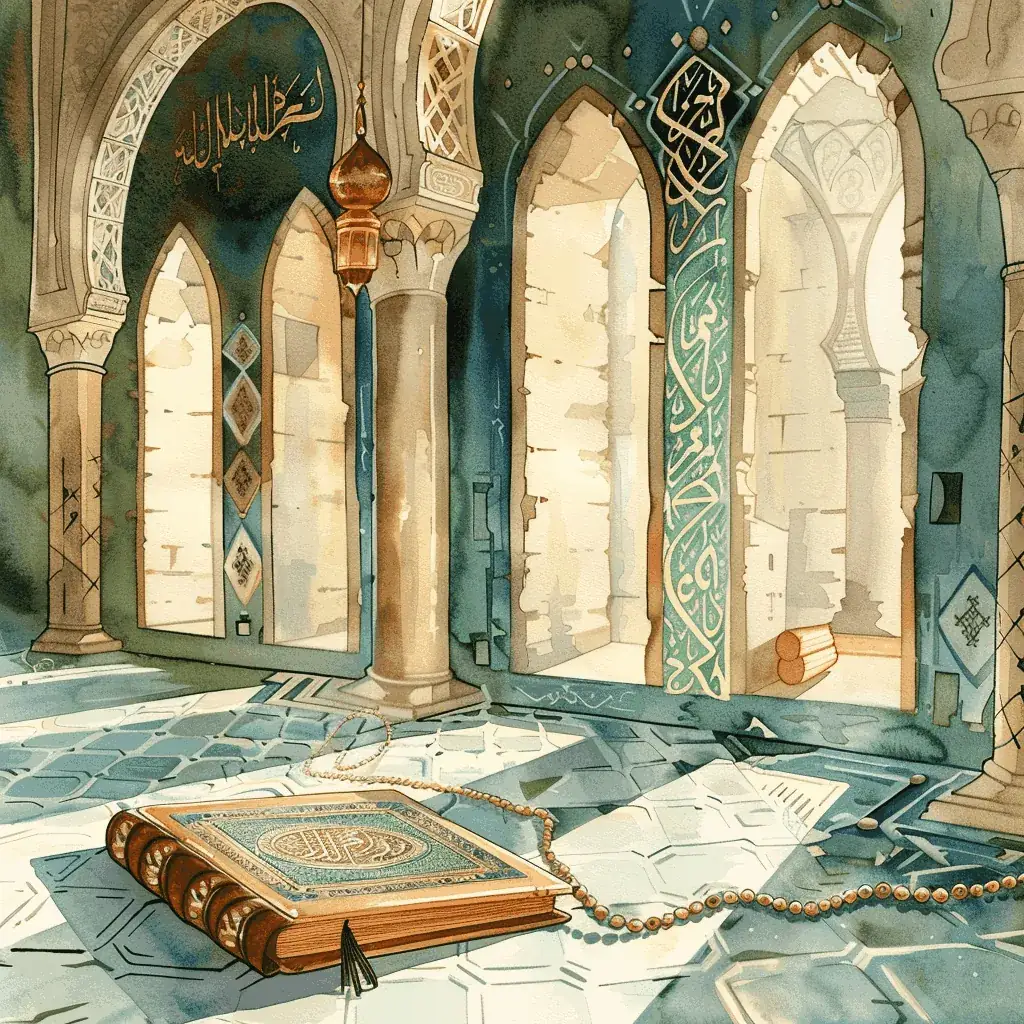
The Quiet Truth Most Muslims Live With
If you are Muslim and you do not speak Arabic, you are not alone. You are actually in the majority. Out of nearly two billion Muslims around the world, the overwhelming majority are not native Arabic speakers. The largest Muslim populations live in Indonesia, Pakistan, India, Bangladesh, Nigeria, and Turkey. Their first languages are Bahasa, Urdu, Hindi, Bengali, Hausa, and Turkish. Arabic, the language of their faith, often remains something they recite rather than understand.
And there is a particular feeling that comes with that. The feeling of knowing the words to Surah Al Fatihah by heart, of saying it five times a day for years, of reciting it during the most sacred moments of your life, while only loosely understanding what each word actually means. The feeling of opening the Quran and seeing letters you can read but meanings you have to look up. The feeling of listening to a beautiful khutba and waiting for the translation to catch up.
This is not a guilt trip. It is a starting point. Because in 2026, learning Arabic as a Muslim is more accessible than it has ever been. The tools have changed. The methods have improved. And the journey from “I can recite” to “I actually understand” is shorter than you might think.
Three Different Arabics (And Why the Distinction Matters)
Before you start learning, you need to understand something that confuses almost every beginner: Arabic is not one language. It is at least three layers, and they overlap in complicated ways.
1. Quranic Arabic (Classical Arabic)
The Quran was revealed in the early 7th century in a form of Arabic spoken by the Quraysh tribe of Mecca. This is sometimes called Classical Arabic or Quranic Arabic. It is the most formal, most elevated, most rhetorically complex form of the language. The vocabulary is rich, the grammar is precise, and the structure is poetic. It is the language of revelation.
Quranic Arabic is not spoken in daily conversation anywhere. Nobody walks into a store in 2026 and orders coffee in Quranic Arabic. It is preserved through religious recitation, religious study, and the unchanging text of the Quran itself.
2. Modern Standard Arabic (MSA, or Fusha)
MSA is a modernized version of Classical Arabic. It is the language used in newspapers, on television news broadcasts, in formal speeches, in academic writing, and in pan Arab media. If you watch Al Jazeera, you are hearing MSA. If you read an article in Asharq Al Awsat, you are reading MSA.
MSA is closely related to Classical Arabic. The grammar is largely the same. The vocabulary overlaps significantly. Someone who can read the Quran fluently can also read modern Arabic news with some effort. This is why MSA is what most academic Arabic programs teach. It is the bridge between Classical Arabic and the modern Arab world.
But MSA is not what people speak in their homes either. Nobody chats with their friends in MSA. It feels formal and stiff in conversation, like speaking Shakespearean English at a coffee shop.
3. Spoken Dialects
What people in the Arab world actually speak in daily life are dialects. Egyptian, Levantine (Palestinian, Syrian, Lebanese, Jordanian), Gulf (Saudi, Emirati, Kuwaiti), Moroccan, Iraqi, Sudanese, and many more. These dialects evolved over centuries from Classical Arabic but have grown apart from it (and from each other) in vocabulary, pronunciation, and grammar.
If you visit Cairo or Amman or Casablanca, this is the Arabic you will hear and need to speak. If you watch Egyptian movies, listen to Lebanese music, or talk to Muslim relatives from Morocco, you are interacting with dialects.
So Which Arabic Should a Muslim Learn?
The honest answer: it depends on your goal. And most Muslims have more than one goal.
If your only goal is to understand the Quran better, Classical Arabic is the most direct path. There are dedicated Quranic Arabic programs that focus exclusively on the vocabulary and grammar found in the Quran. This is the traditional approach taught in madrasas and Islamic schools worldwide.
If you want to read modern Islamic books, follow Arab scholars, and engage with religious content beyond the Quran, you need MSA. Most Islamic books published in the past century are written in MSA. Most contemporary Arab scholars speak in MSA when delivering lectures. If you only know Quranic vocabulary, you will struggle with anything written after 1900.
If you want to actually talk to other Muslims, visit Muslim countries, marry into an Arab family, or work in the Muslim world, you need a spoken dialect. Reading the Quran will not help you negotiate with a shopkeeper in Marrakech or have a conversation with your in laws in Beirut. Real people speak real dialects.
Here is the thing most teachers do not tell you: these three goals are not in conflict. Learning a spoken dialect actually helps you with Quranic and Modern Standard Arabic, because all three share the same alphabet, similar grammar foundations, and an enormous overlapping vocabulary. The skills you build speaking Egyptian Arabic with a friend transfer directly to understanding a verse from Surah Yusuf.
The Smartest Approach for Muslim Learners in 2026
If you are a Muslim starting from zero in 2026, here is the approach that gives you the most practical benefit in the shortest time:
Step 1: Learn the Arabic Alphabet (Week 1)
Whatever your goal, you need to be able to read the script. The Arabic alphabet has 28 letters and can be learned in about a week with daily practice. Once you can decode letters into sounds, you can start sounding out Arabic words on signs, in books, and in Quranic verses.
Step 2: Pick One Spoken Dialect to Practice Daily (Months 1 to 6)
This is the unconventional advice. Most Muslim Arabic learners are told to start with Quranic Arabic or MSA. But for actual progress, picking a spoken dialect is far more effective in the early stages.
Why? Because spoken dialects let you actually use Arabic. You can have conversations, even simple ones. You can build vocabulary that connects to real situations. You can train your ear to natural speech patterns. You can develop pronunciation muscles for the unique Arabic sounds (the ع, the ح, the ق). And every word you learn is a word you can practice every single day.
Pick the dialect that connects to your community or interests. If your family is Egyptian, learn Egyptian. If you have ties to Palestine, learn Levantine. If you live near Moroccan Muslims, learn Moroccan. If you have no specific connection, Egyptian Arabic is the most widely understood across the Arab world thanks to the Egyptian film and music industry.
Step 3: Build Religious Vocabulary on the Side (Months 3 onward)
While you are learning conversational Arabic, start adding religious vocabulary in parallel. Words like الحمد لله (alhamdulillah), إن شاء الله (insha’Allah), جزاك الله (jazak Allah), بارك الله (barak Allah). Most Muslims already know these phrases, but knowing what each individual word means transforms your understanding of how Arabic actually works.
Pick one short surah (like Al Fatihah, Al Ikhlas, Al Falaq, or An Nas) and learn the meaning of every single word. Word by word. This is more powerful than memorizing translations of entire surahs.
Step 4: Transition to Quranic Study Once You Have Foundations (Months 6 onward)
After six months of daily dialect practice and gradual religious vocabulary building, your reading speed, your familiarity with grammar patterns, and your general feel for the language will be strong enough to tackle dedicated Quranic Arabic study.
At this stage, you can use traditional Quranic Arabic resources (like Arabic Tutor by Maulana Abdul Sattar Khan or Madinah Arabic Reader) and they will feel much more accessible than they would have on Day 1. The vocabulary you have already built and the grammar instincts you have developed will make the learning curve much gentler.
Why Modern Tools Matter for Muslim Learners
Traditional Quranic Arabic education has produced incredible scholars for centuries. But it is also slow, expensive, and often inaccessible for working adults with families and busy lives. The traditional approach assumes you can dedicate years of full time study in a madrasa or under a private teacher. Most Muslims in the West (and increasingly across the Muslim world) cannot do that.
This is where modern Arabic learning tools genuinely help. The right app can give you:
- Daily speaking practice in your chosen dialect, even when no Arabic speaker is around to talk to
- Pronunciation feedback for the unique Arabic sounds that affect both daily conversation and Quranic recitation
- Vocabulary that builds on itself through spaced repetition and contextual learning
- Interface in your native language (apps like Yallah Speak are available in English, German, French, Spanish, Turkish, Russian, Hindi, and Indonesian, which covers most major Muslim populations)
- Flexibility to learn in 10 minute sessions during commutes or breaks, instead of requiring hours of dedicated study time
None of this replaces the depth of traditional Quranic study under a qualified teacher. But for the first six months to a year, when you are building foundations, modern tools make the difference between progress and stagnation.
Common Concerns from Muslim Learners
“Is it disrespectful to learn dialect Arabic before Quranic Arabic?”
No. Arabic is a unified language with multiple registers. Learning Egyptian or Levantine Arabic does not diminish your ability or motivation to learn Classical Arabic later. Many of the greatest Arabic scholars in history grew up speaking dialects and learned Classical Arabic on top of that foundation. The two complement each other.
“Will I forget how to recite if I focus on conversation?”
The opposite, actually. Improving your general Arabic pronunciation and rhythm makes your Quranic recitation more accurate, not less. The throat sounds (ع, ح, خ, غ) and emphatic letters (ص, ض, ط, ظ) that appear in dialect practice are the exact same sounds found in the Quran. Practicing them daily through conversation improves your tajwid more than reciting alone.
“I feel embarrassed that I do not already know Arabic.”
Almost every Muslim learner feels this way at some point. There is sometimes an unspoken assumption that because Arabic is the language of Islam, all Muslims should know it. But the historical reality is that Arabic has always been a learned language for the majority of Muslims, even in classical times. Persian, Turkish, Urdu, Malay, and dozens of other Muslim languages have flourished alongside Arabic for centuries. There is no shame in starting now. The shame would be never starting at all.
“I tried before and gave up. Why would this time be different?”
Because the tools have fundamentally changed. The Arabic learning materials available in 2026 (especially conversation focused apps with dialect support and pronunciation feedback) make daily progress possible in ways that were not feasible even five years ago. If your previous attempts involved a textbook, a flashcard app, or a YouTube series, you were not given a fair shot. Try a method built for actual speaking practice and see how different it feels.
The Reward at the End
Imagine being able to listen to Surah Al Baqarah and actually following the meaning as you hear it. Imagine reading a verse and recognizing the root of each word, understanding why it was chosen, and feeling the precision of the language behind your faith. Imagine being able to talk to your grandmother in her native dialect, or to walk through a mosque in Istanbul or Marrakech and connect with people in their own words.
That is what learning Arabic as a Muslim eventually offers. It does not happen in a week. It does not happen in a month. But it happens, faster than you expect, when you commit to the right method and show up every day. Your relationship with the Quran, with Islamic scholarship, with the global Muslim community, and with the language itself changes in ways that are hard to describe until you experience them.
The first step is the hardest. Pick your tool, pick your dialect, learn your alphabet. Start tomorrow. Six months from now you will be reading words you never thought you would read.
بارك الله فيك. May God bless your journey.
Stop studying Arabic. Start speaking it.
AI conversations in 10 real dialects, honest pronunciation feedback and a course from A1.
Get Yallah Speak — free